
Researchers Examine Role of Virus in Toledo Water Crisis
Municipalities and scientists should consider more stringent methods of water quality monitoring following a finding that a virus was involved in Toledo’s water crisis, according to a new study.
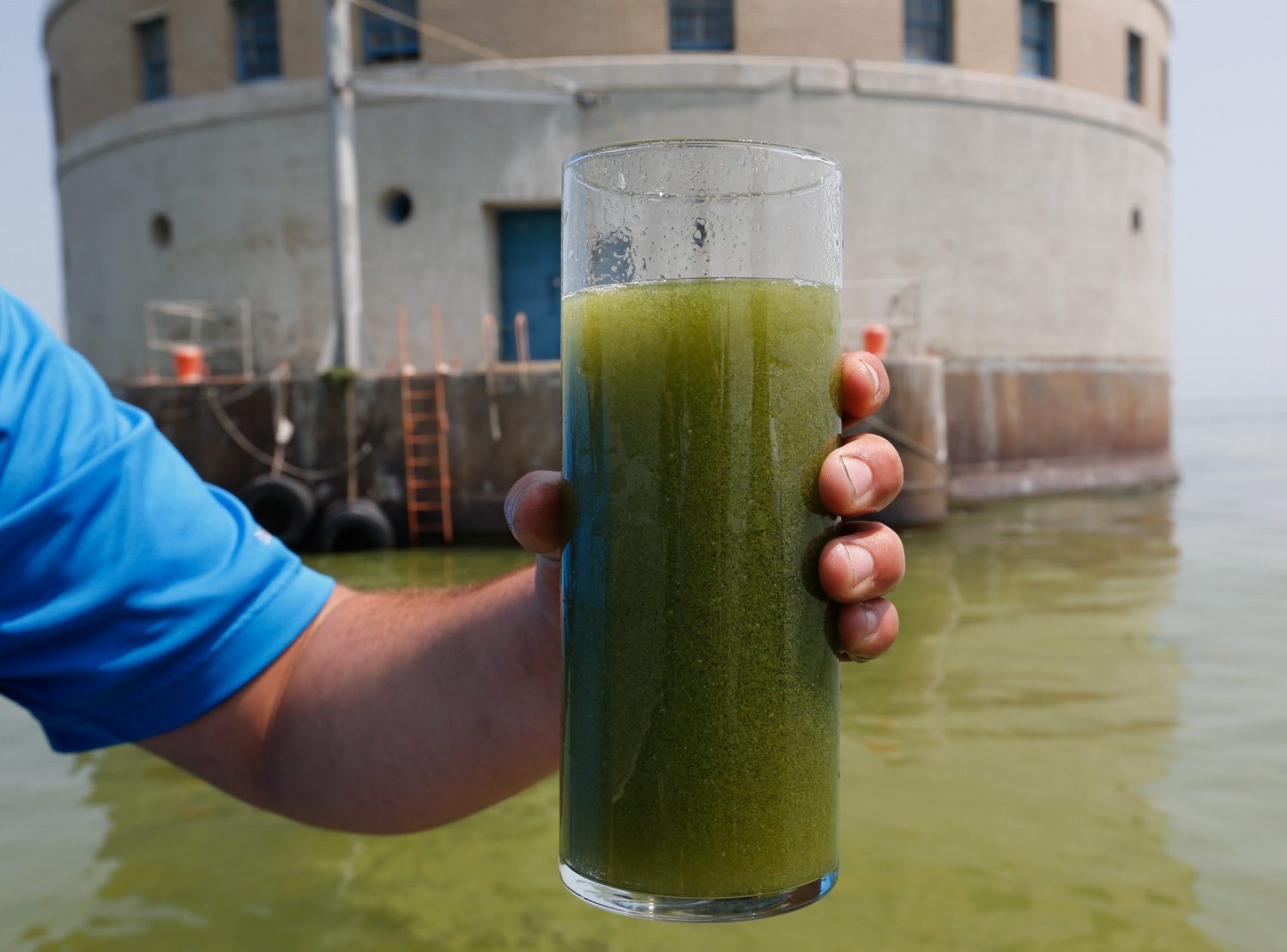
In August 2014, toxins from harmful algal blooms in Lake Erie caused officials to shut down the city of Toledo’s water supply, leaving more than 400,000 area residents without potable water for more than two days.
The study was led by researchers at the University of Tennessee and James Madison University. The 25-person team included the University of Michigan’s (UM) Gregory Dick and Bowling Green State University’s (BGSU) Michael McKay.
The researchers examined the physiological traits of Microcystis, the cyanobacterial organism responsible for scum-like algal blooms in Lake Erie. They found that it was consistent with algal blooms from 2012 and 2013 except for one thing: Microcystis cells had an exceptionally severe viral infection, according to a news release from UM.
“Typically, toxins from algal blooms are trapped within the cell until the cell dies. But viral infections can cause cells to break open, leaking the toxin into the water and subsequently into water facility intake pipes and treatment centers,” UM said.
The viruses analyzed in this study infect only bacteria and do not infect humans, according to the university.
“The study changes the way we think about how the toxin moves around aquatic systems and get into water supplies,” said Steven Wilhelm, a professor of microbiology at the University of Tennessee who has studied Lake Erie since 1997. “It may help us understand how these organisms persist in nature.”
Dick said the study provides important insights into the environmental and biological conditions that led to the Toledo water crisis.
“It shows how molecular genetic data retrieved directly from water samples can shed light on the causes and impacts of toxic cyanobacterial blooms,” Dick said.
“In particular, these data indicate that the cyanobacteria were stressed for both nitrogen and phosphorus, suggesting that the availability of both nutrients is important for blooms,” Dick continued. “The results also highlight the potential role of cyanobacterial viruses in affecting water quality. By infecting the cyanobacteria, they may well be releasing the toxin from within cells out into the water, where it is more difficult to remove.”
The scientists documented the viral infection by sequencing RNA from the Toledo water samples. They also used mathematical models to simulate how the algal blooms moved through water — satellite images were used to pinpoint where the blooms were on certain days and computer models filled gaps in between.
“The biggest thing we’re learning is that there are dissolved and particulate sources of the toxin,” Wilhelm said. “We historically think of toxin as being stuck in the cell. In this study, we have identified a way for the toxin to move from particulate to the dissolved phase.”
“Particulate” is a term used to describe anything bigger than a cell, something that is commonly collected on a filter. It is “dissolved” once it is able to slip through the filter.
The finding justifies the need for scientists and municipalities to monitor the toxin differently than they have traditionally done by looking at the dissolved or cell-free phase rather than just the particulate stage, Wilhelm said. This would allow water management authorities to better detect the toxin before it spreads through the water supply.
“There are ways to do the dissolved phase, but they are cumbersome and not typically run by most monitoring agencies,” he said. “This study stresses the need to do that.”
Next steps include examining whether the viral infections play a role in controlling the population of toxic algae and continued studies on the nutrients these cells use to grow. The scientists already have made a novel observation in this study, confirming cells were using urea as a nitrogen source.
“It’s making us re-evaluate how nutrients may shape the microbial communities,” Wilhelm said.
Researchers are still trying to understand why algal blooms have exploded in growth since the 1990s in bodies of water around the country and the world.
“Algal blooms are growing in intensity, severity and frequency and we’re trying to understand why,” Wilhelm said. “This study is another piece of the puzzle.”
Story originally published in The Hannah Report on June 5, 2017. Copyright 2017 Hannah News Service, Inc.